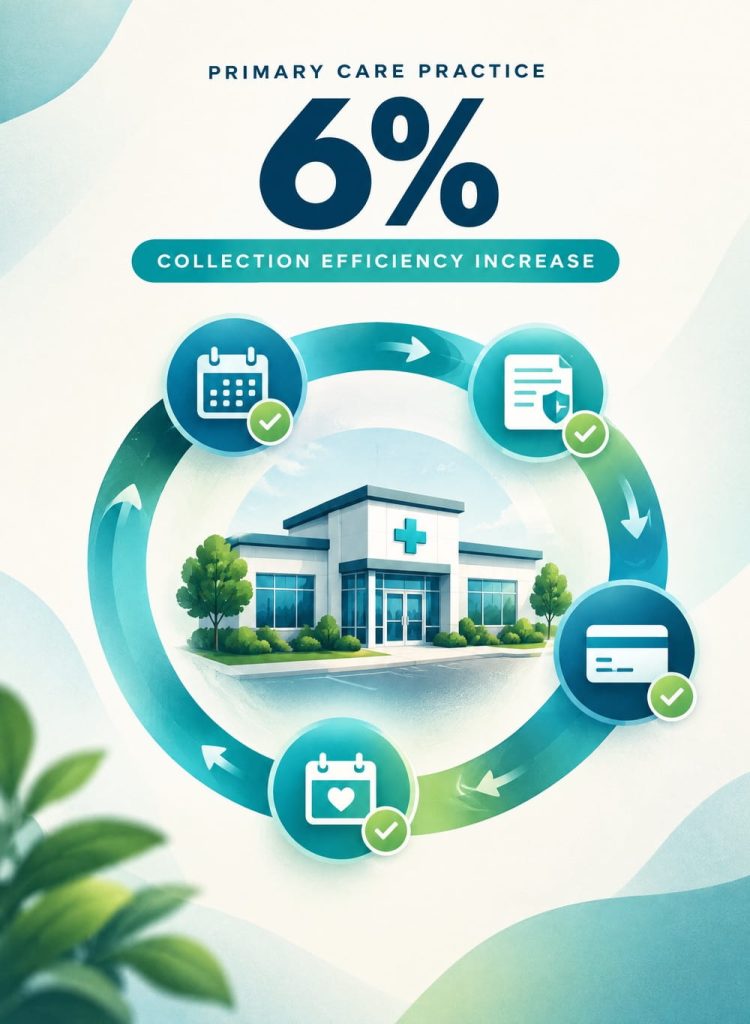
A Florida Rural Health Clinic needed a more structured way to manage outstanding revenue and day-to-day follow-up. ATS worked with the team to clarify priorities, ownership and reporting across the collection workflow.
At a Glance
| Client | Rural Health Clinic (RHC) |
| Location | Florida |
| Primary focus | Collection performance and revenue-cycle follow-up |
| Reported result | 3% increase in collections |
The Challenge
The clinic wanted to improve collections while maintaining visibility across outstanding revenue and day-to-day follow-up. The engagement required an approach suited to the operating realities of a Rural Health Clinic.
How ATS Responded
Review the current workflow | Assess the existing collection process, open-account visibility and responsibility split. |
Prioritize follow-up | Focus activity on the accounts and workflow gaps most likely to affect collection performance. |
Create clearer visibility | Use defined ownership and reporting to keep progress, exceptions and next actions visible. |
The Result
A 3% Increase in Collections
ATS reports that the Rural Health Clinic increased collections by 3% during the measured engagement period. The result reflects focused attention on revenue-cycle execution and follow-up within the agreed scope.
Why It Matters
Urgent care revenue cycles can generate a large volume of follow-up activity. Defining the backlog, assigning next actions and tracking exceptions can make outstanding revenue more manageable.